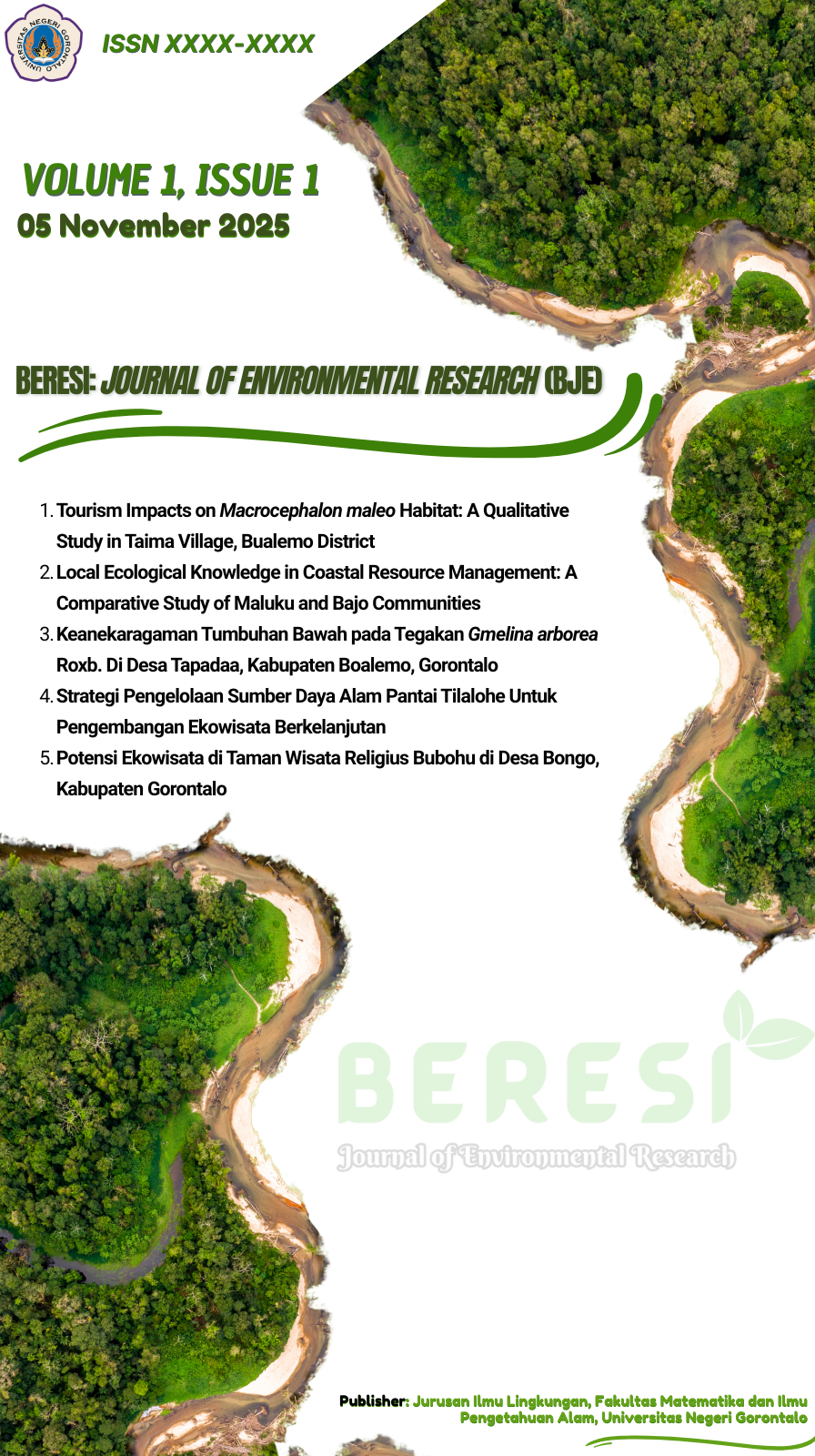
Local Ecological Knowledge in Coastal Resource Management: A Comparative Study of Maluku and Bajo Communities
DOI:
https://doi.org/10.37905/bje.v1i1.5Keywords:
Adaptive management, Bajo, Coastal ecosystem, Indigenous knowledge, MalukuAbstract
Background: Coastal ecosystems in Indonesia hold significant ecological and economic value and are managed traditionally by many indigenous communities. Among them, the Indigenous Peoples of Maluku and the Bajo people have long maintained sustainable practices rooted in local ecological knowledge. This study aims to explore how their traditional wisdom contributes to coastal resource management amid modern environmental challenges. A brief review of existing studies highlights the effectiveness of customary marine governance systems and the resilience of these communities. Methods: This study uses a literature review, examining peer-reviewed journal articles, research reports, and policy documents published within the last five years. The analysis is grounded in the theoretical framework of community-based resource management and employs a qualitative-descriptive approach to interpret patterns and principles in local ecological knowledge. Findings: The Maluku communities utilize the Sasi system, a customary rule that temporarily restricts resource access to allow ecosystem regeneration, demonstrating collective compliance and ecological sensitivity. In contrast, the Bajo people emphasize adaptive mobility and traditional navigation techniques, aligning their fishing practices with natural marine cycles. Both groups exhibit dynamic socio-environmental interactions that enhance ecological resilience. The findings confirm the relevance of indigenous knowledge systems in supporting sustainable coastal management and suggest their compatibility with modern policy frameworks. Conclusion: Local ecological knowledge practiced by the Maluku and Bajo communities effectively promotes the sustainability of coastal ecosystems through restriction-based and adaptation-based strategies. These systems offer viable models for integrating customary practices into national environmental policies. Novelty/Originality: This study presents a comparative analysis of two distinct indigenous ecological systems, highlighting the complementary roles of spatial restriction (Sasi) and environmental mobility in traditional coastal management, a topic rarely addressed in current literature.
Downloads
Published
How to Cite
Issue
Section
License
Copyright (c) 2025 This work is licensed under a Creative Commons Attribution-ShareAlike 4.0 International License.

This work is licensed under a Creative Commons Attribution-ShareAlike 4.0 International License.